Available Products
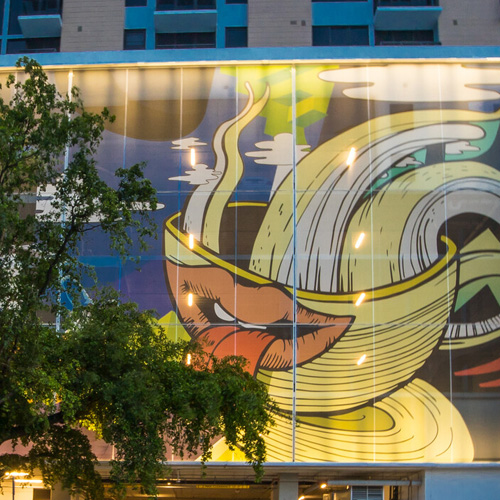
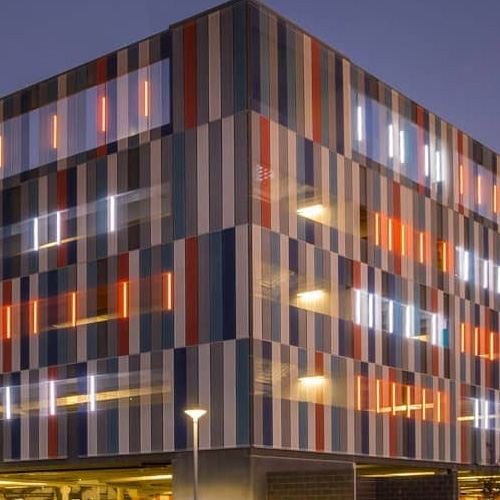
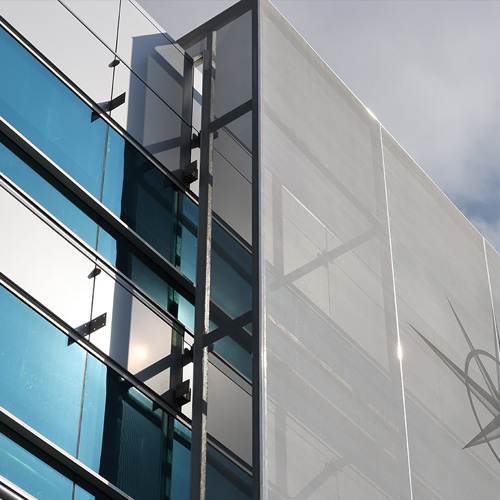
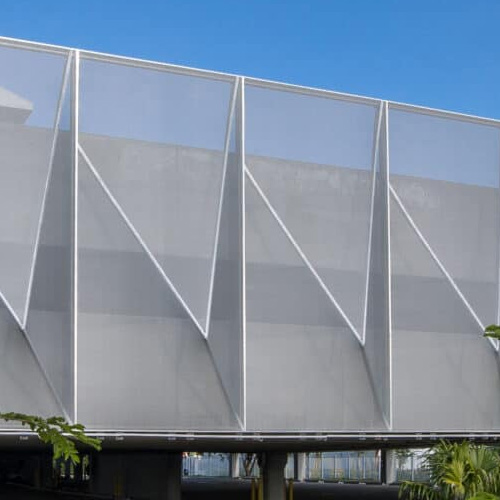
Lighting can be an integral part of a facade and further support the project’s goals. By developing a facade lighting plan, project teams can identify opportunities to:
Accentuate the Facade: Lighting can highlight key structural elements or patterns in the mesh or facade system, adding dimensionality and visual interest after dark.
Improve Wayfinding and Safety: A well-lit facade can help guide users to entrances and exits, contributing to a more secure and welcoming environment.
Support Brand Identity: Color-changing or programmable lighting allows for visual customization, letting the building reflect brand colors, seasonal changes, or community events.
Extend the Functionality of Public Spaces: Lighting can activate adjacent plazas, walkways, or gathering areas, making the space usable and inviting beyond daylight hours.
Add Drama Through Shadow Play: When combined with perforated or tensile mesh materials, lighting can cast dynamic shadows on walls or ground surfaces, adding artistic appeal.
Create a Layered Nighttime Identity: Just as facade materials contribute to daytime aesthetics, lighting adds a distinct nighttime character that complements the overall design.